Static or Motion? Most People Ask This Question Backward
Every week someone walks into the workshop, points at a motion rig and says “that one”. Fair enough. They look phenomenal.
Then we ask what their race is, and about a third of the time the honest answer is: not yet.
Strange thing for a business that builds motion platforms to say. Stay with it.
What motion actually does
Motion does not make you faster. Let that land, because plenty of marketing implies otherwise.
Independent back-to-back testing on the same circuit has placed the 2DOF and 3DOF lap time variance within the noise margins. No measurable pace gain. What motion does is feed your inner ear information your eyes cannot: weight transfer under braking, the exact moment the rear steps out, compression as you drop into a dip. Your body starts reacting to the car rather than the picture.
That is immersion, and it is worth paying for. It is just not lap time. If you are chasing tenths in a league, pedals and a rigid frame come first every time.
The numbers, in plain English
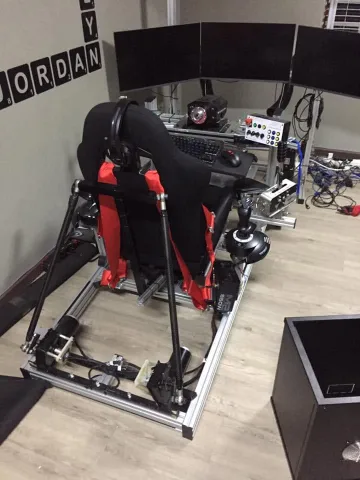
2DOF gives pitch (nose up and down) and roll (side to side). It tilts the whole rig. Sounds great until you notice that tilting forward under braking also pushes you toward the wheel. Your muscle memory depends on a fixed distance between your body and the controls. 2DOF quietly breaks that.
3DOF adds heave, the whole platform moving vertically. This is the threshold. Curbs get a genuine vertical jolt. Bumps feel like bumps. Most people who have owned both say the same thing: if you can stretch to 3DOF, start there.
4DOF usually adds yaw, or traction loss, physically sliding the back of the rig out under oversteer. For competitive racing, this is arguably the single most useful axis you can add, because it tells you the car is going before the screen does.
6DOF does everything. It is also the biggest, loudest, and most expensive, and it wants a room you are prepared to give up.
One thing that never makes it onto the spec sheet: motion-cueing software matters as much as the hardware. Two platforms with identical actuators can feel completely different depending on what is driving them. Axis count is a shopping label, not a quality rating.
Who should stay static, for now
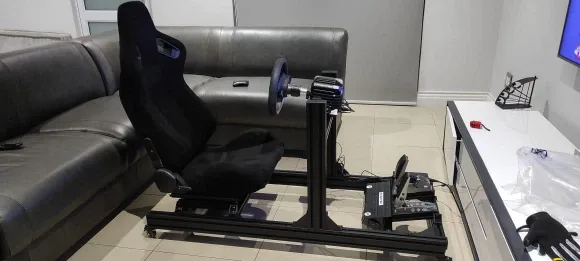
- You are new and still working out whether you prefer GT3, rally, or open wheel
- Your pedals are still potentiometer-based. Fix that first. Always.
- You share a wall with someone who sleeps
- Your budget only reaches motion by compromising everywhere else
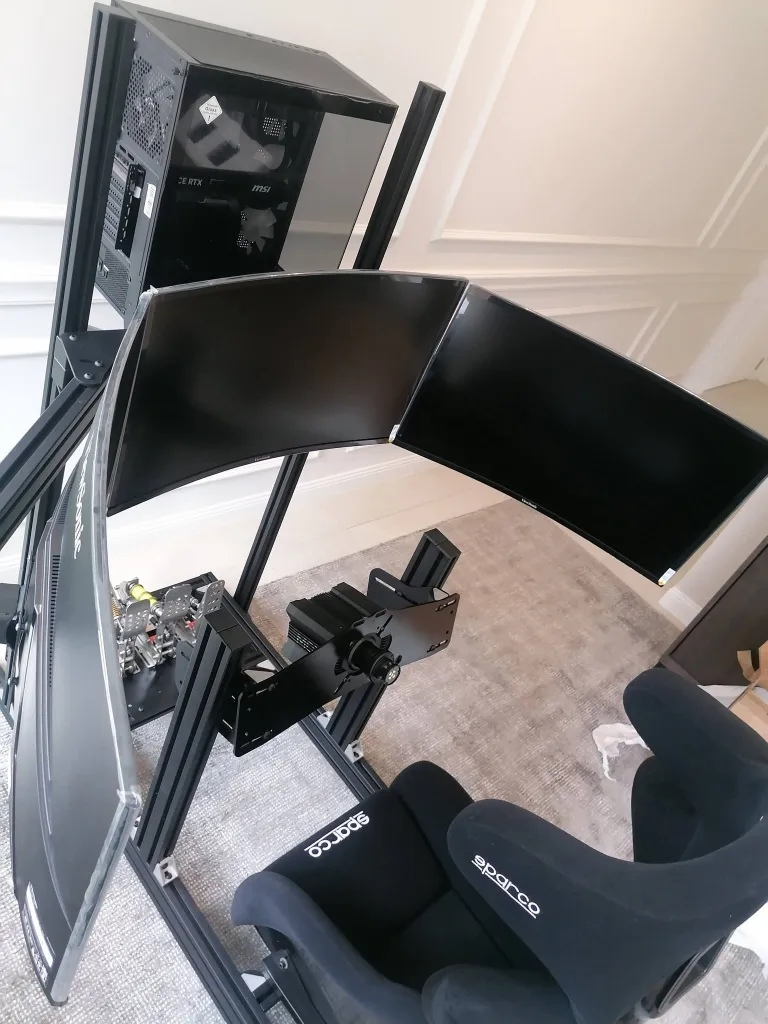
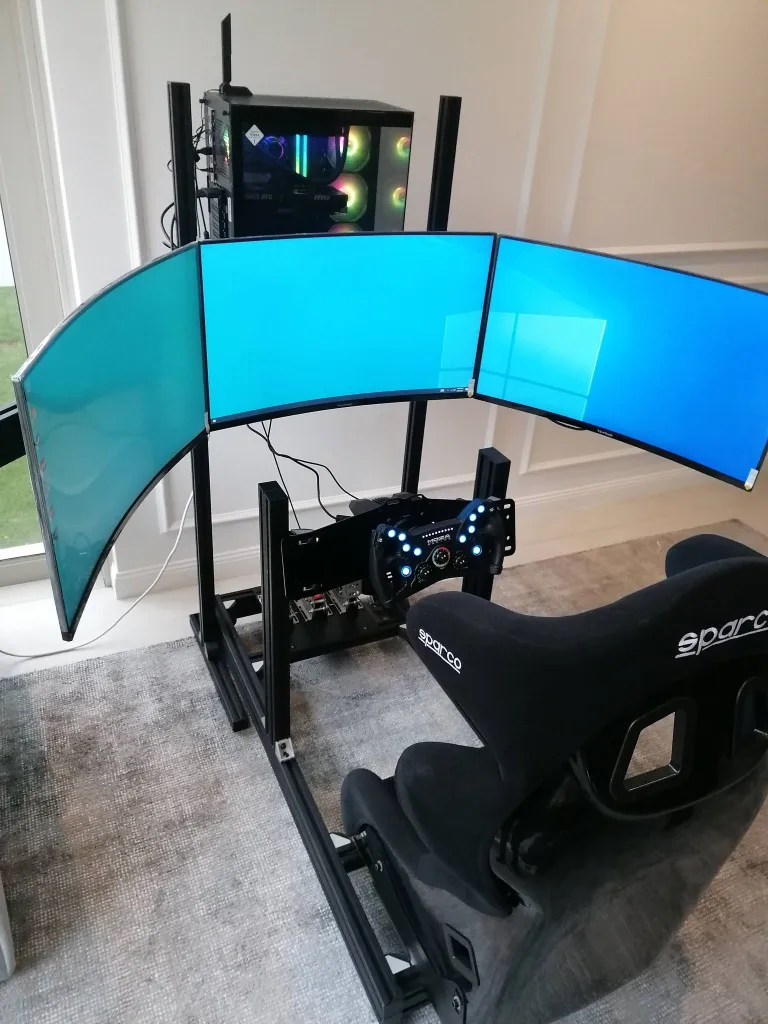
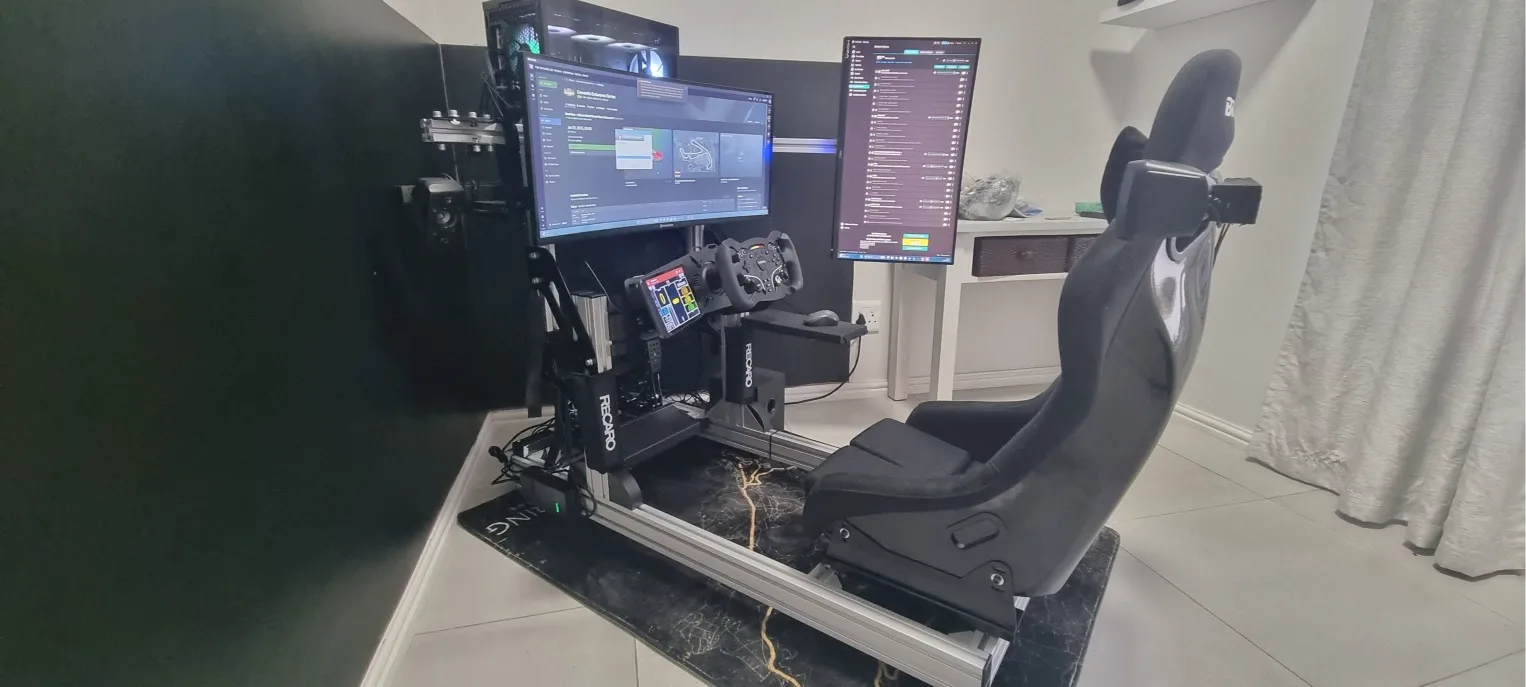
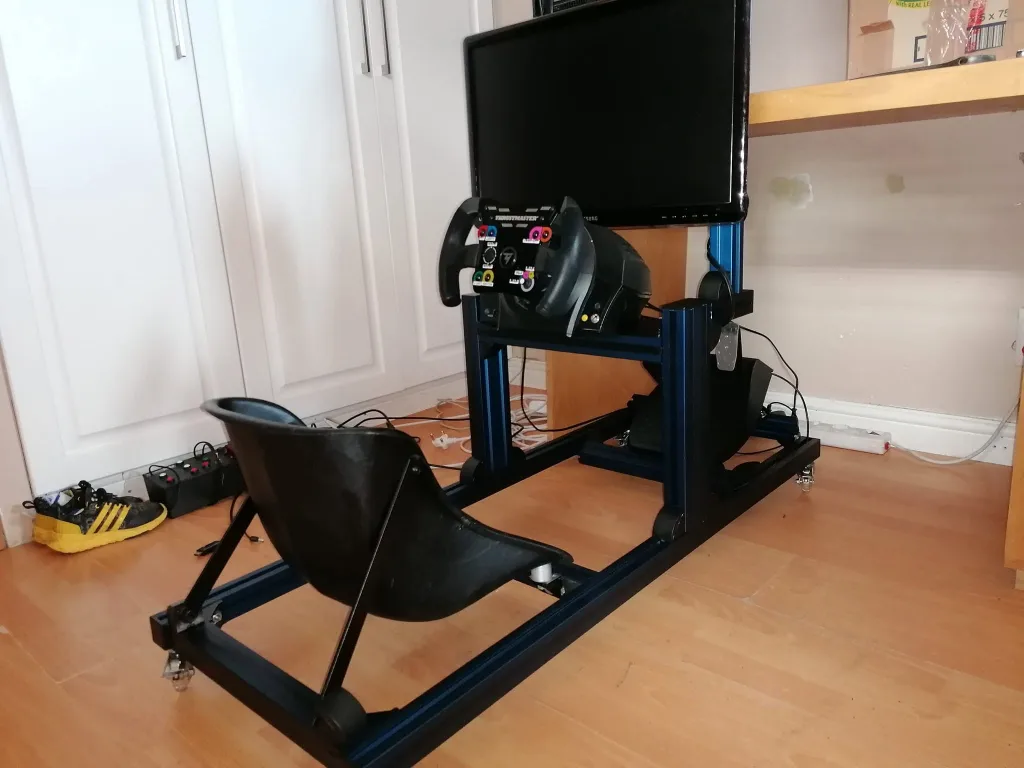
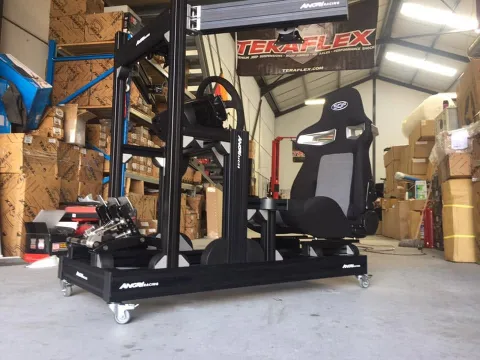
A great static rig beats a compromised motion rig every time. A frame that flexes under a direct drive base will irritate you every lap for years, and no amount of movement underneath it fixes that.
Who should absolutely go motion?
Rally and off-road drivers. Crests and jumps with heave are a genuinely different sport.
Anyone building for events, corporate days, or a gaming center. Motion sells the experience in about four seconds.
Drivers with the fundamentals already sorted who want the last layer of realism. Flight sim pilots. Motion in aviation is criminally underrated.
The honest sequencing
Rigid frame, then pedals, then wheelbase, then screens, then motion. Every step in that order improves what came before it. Motion added to a rig that already flexes just amplifies the flex.
Static builds take one to two weeks. Motion platforms take three to six weeks, depending on the specifications, because they are engineered around your rig rather than bolted underneath it and hoped for.
Do not settle this from a forum thread. Come and feel both. Book a demo at our Firgrove workshop in Cape Town, drive a static rig and a motion platform back-to-back, and in 10 minutes we’ll answer it properly. Book a demo