Building a Home Flight Sim: What to Buy First and What to Ignore
Sim racers argue about wheelbases. Flight simmers argue about everything.
Cut through it, and the question is always the same: what do I buy first so I do not waste money? There is a correct answer, and it starts with something you have to be honest about.
Start with the aircraft, not the hardware
Everything follows from what you actually want to fly.
- General aviation and Boeing-style airliners want a yoke. Two hands, pitch and roll, the sight picture of a Cessna or a 737.
- Airbus wants a sidestick.
- Military jets and helicopters want a HOTAS, a stick and throttle designed so your hands never leave either.
Buy a HOTAS because it looks aggressive, then spend your evenings in a Cessna 172, and you will be annoyed within a month. Match the hardware to the cockpit, not to the product photo.
The buying order that works
1. Primary control and throttle. Getting off the keyboard and mouse onto a yoke or stick with a proper throttle is the single biggest jump in the hobby. Small inputs start producing small results, which is how real aircraft behave.
2. Rudder pedals. The most-skipped and most-underrated purchase in flight simming. Pedals separate people who fly realistically from people who steer with the yoke and hope.
You do not strictly need them. A twist stick or keyboard rudder works. But you want them if you fly:
- Helicopters, where anti-torque input is continuous and a twist grip gets tiring fast
- Taildraggers, which need active directional control on the ground
- Anything with crosswind landings, sideslips, or simulated engine failures
- Multi-engine aircraft, where asymmetric thrust needs sustained rudder
Flying modern airliners on autopilot with yaw damper engaged? Pedals are an upgrade rather than a requirement. Everyone else, buy them second.
3. Throttle quadrant, panels, and switches. Mixture, prop, flaps, gear, radios. This is where the cockpit stops being a game and starts being a procedure.
The problem nobody warns you about
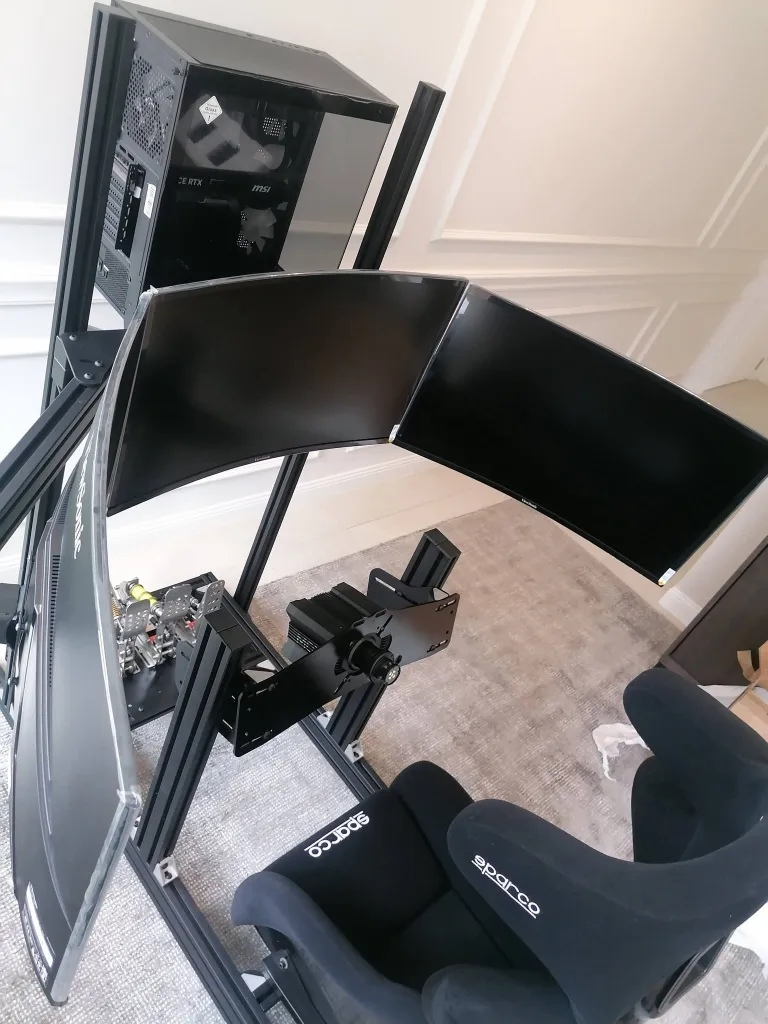
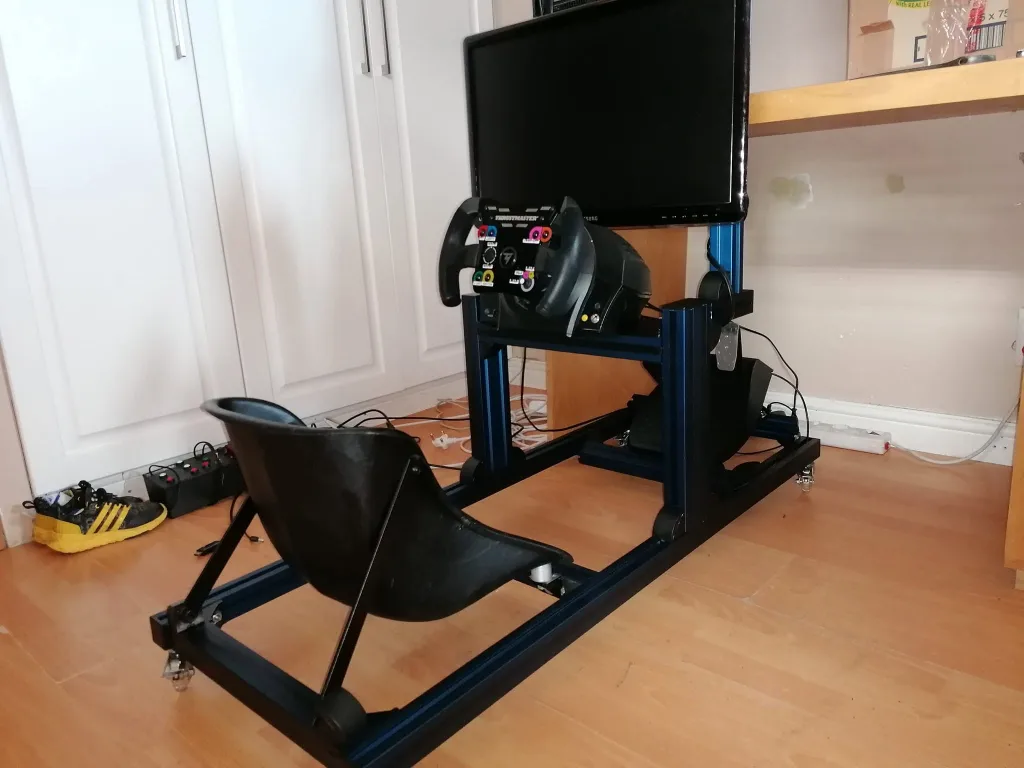
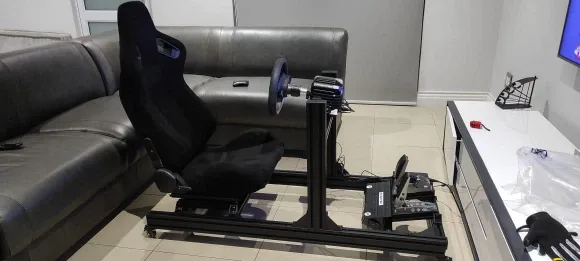
Here is what actually ruins home flight sims. A yoke clamped to a flexing desk. Pedals sliding across a tiled floor every time you brake. A monitor at the wrong height can make your sight picture permanently wrong.
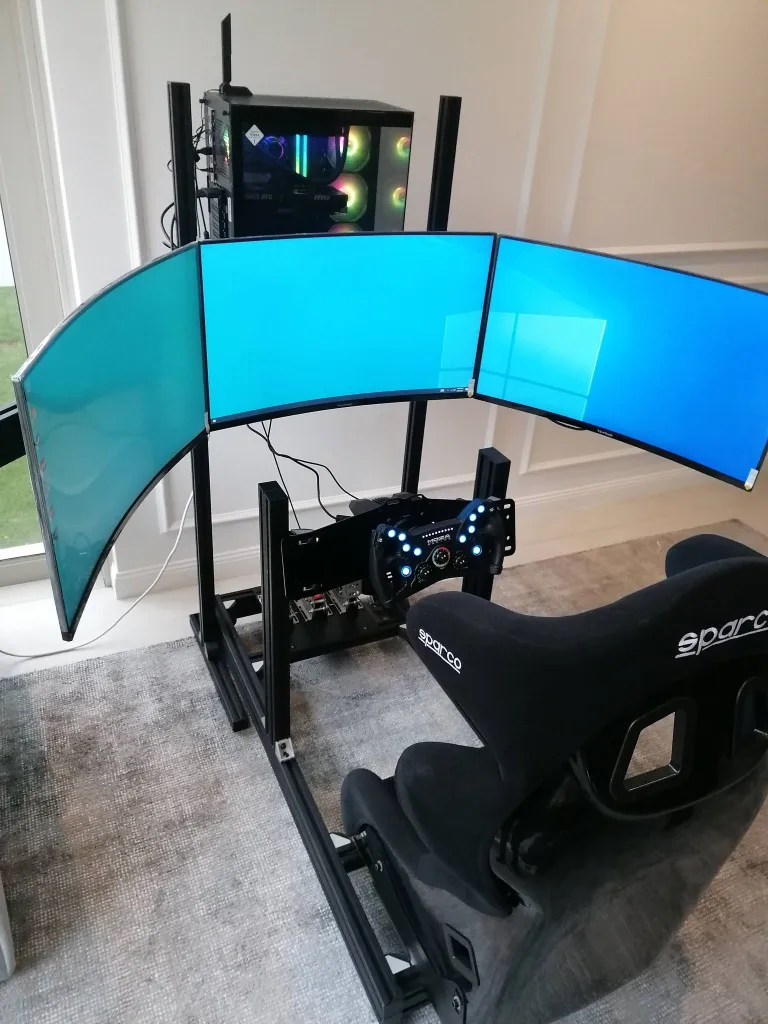
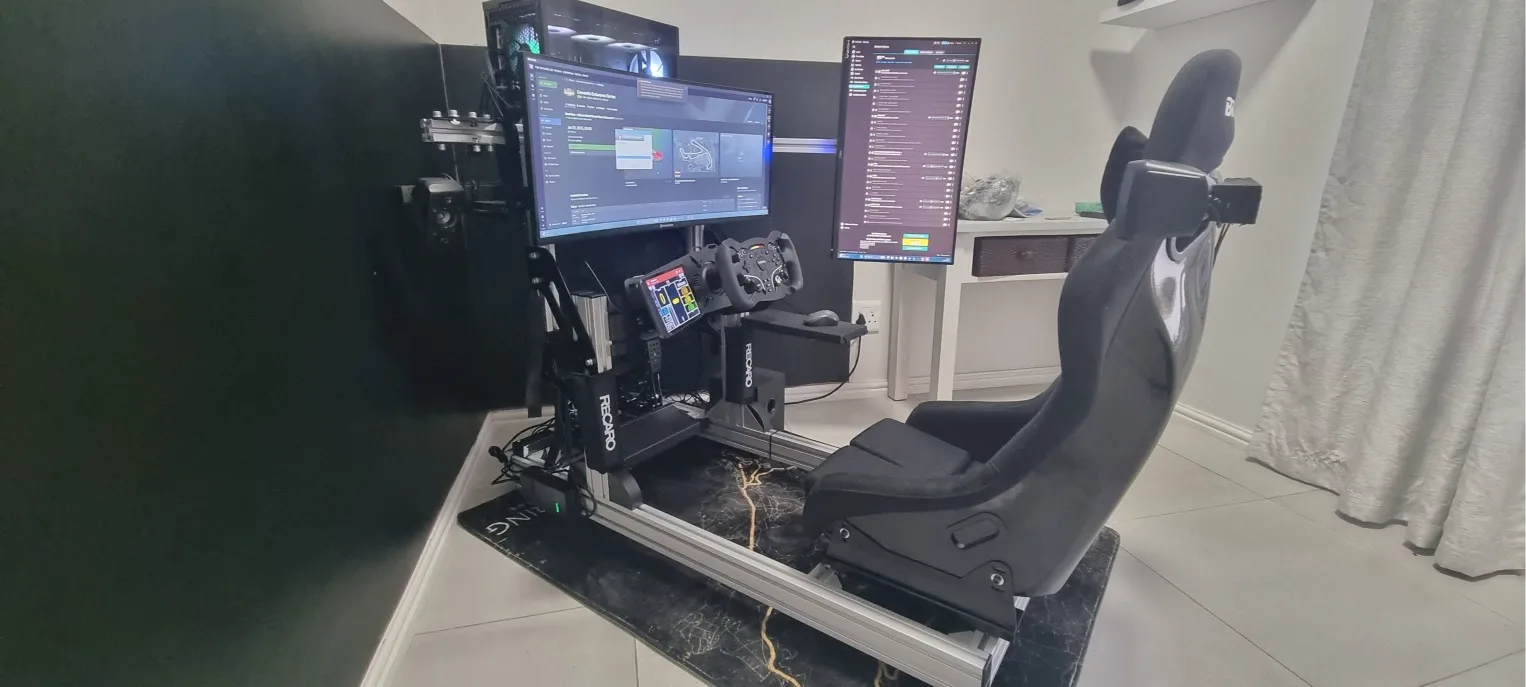
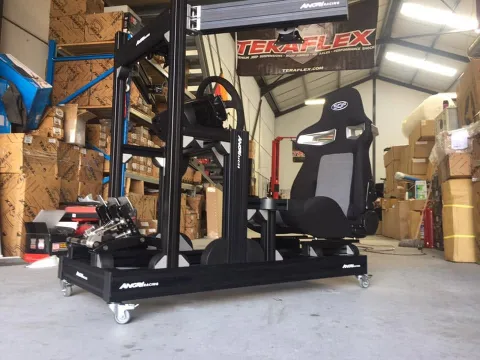
You can spend R30,000 on controls and undo most of it with bad mounting. A rigid frame with properly secured pedals and a screen positioned to approximate the sight picture from the left seat does more for realism than your next hardware upgrade will.
Same argument as sim racing. Stable platform first, better parts second.
Screens: do not overspend yet
One well-placed monitor of 24 inches or larger is enough to start. Position matters more than panel count.
Triples and VR are excellent upgrades, and VR, in particular, provides genuine depth perception that a flat panel can only approximate. But both demand significant GPU headroom, and neither fixes a wobbling yoke. Controls and mounting first.
A note for student pilots
A home sim is a proficiency tool, not time that can be logged. Consumer hardware does not count toward ratings or currency, and anyone telling you otherwise is selling something.
What it does, and does genuinely well, is build flows, instrument scan discipline, radio phraseology, and IFR procedure habits. Turn up to a lesson already knowing where your eyes should go, and every hour in the actual aircraft returns more.
Where Simcade fits
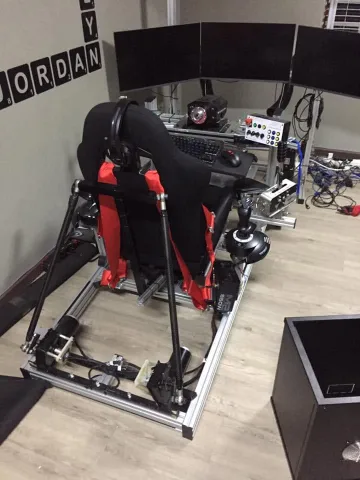
We build flight sim rigs the same way we build racing rigs. Precision-welded, zero-flex, adjustable, properly mounted. Yoke, HOTAS or sidestick. Single screen or triples. Motion if you want the thing most simmers never get to feel.
We also repair HOTAS and flight equipment, which is especially important when the nearest official service center is on another continent.
Flying on a desk clamp and good intentions? Talk to Duane about a flight sim build spec’d around the aircraft you actually fly. Free consultation, and you can sit in a rig at our Firgrove workshop before committing to anything.